

Custom WordPress Development Services: Why Your Business Deserves More Than a Template

You have probably landed on websites that feel like they came out of the same mold: the same hero section, the same chunky buttons, the same stock photo of people shaking hands in suits. That is what happens when a business settles for an off-the-shelf template instead of custom WordPress development.
Your brand is not generic, so your website should not be either.
In this guide we explain what custom WordPress development actually involves, where it beats a template, where it does not, and how to tell whether your business is ready for it.
What Is Custom WordPress Development?
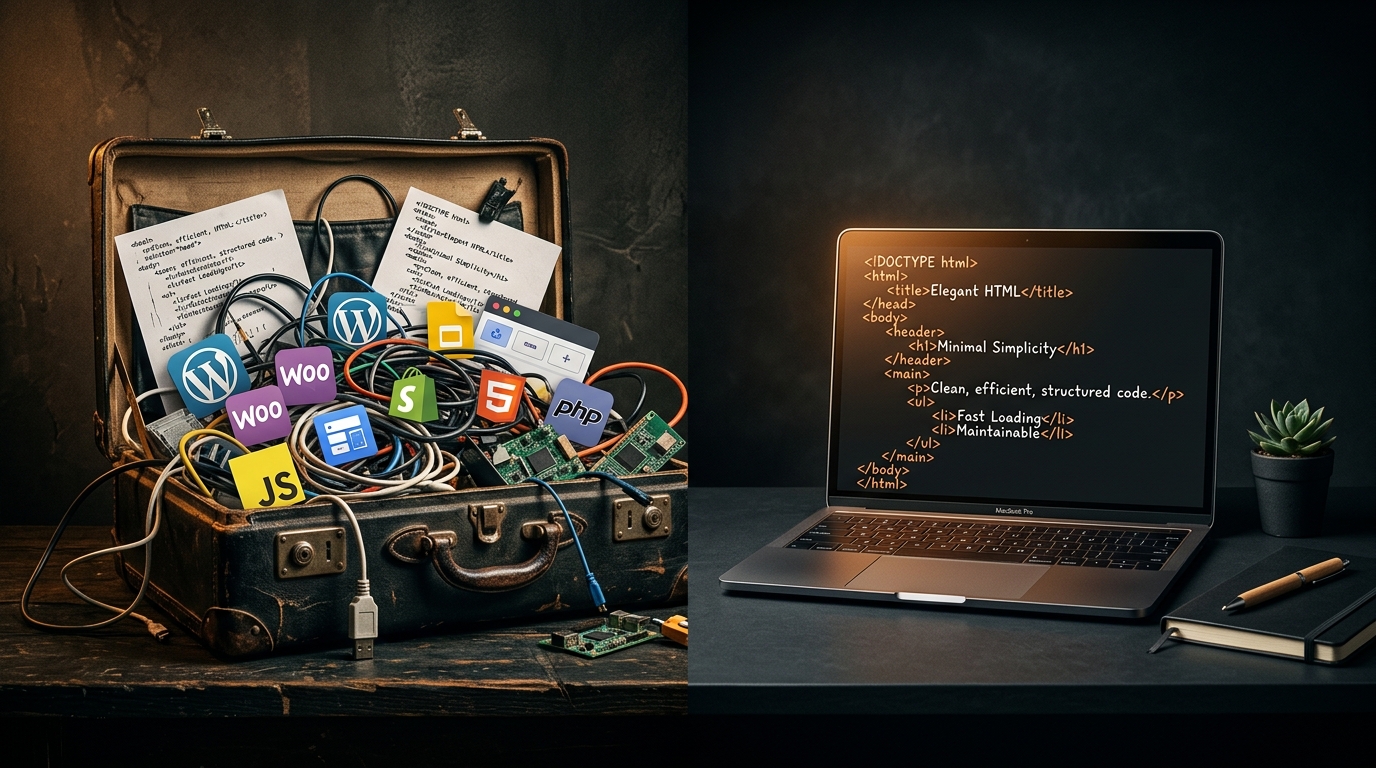
Custom WordPress development means building your site around your brand, your goals and the people who visit it, instead of bending a ready-made theme to fit. There is no bulky multipurpose theme sitting underneath, and no page builder adding hundreds of styles you never use.
In practice, a developer (or a team like ours at Vyntic Studio) writes lean code that does what your site needs and nothing extra. The result is easier to maintain, faster to load and simpler to change later.
Custom Theme vs. Custom Plugin vs. Full Custom Build
- Custom theme: a design layer built for your brand only, so it looks the way you want and loads quickly.
- Custom plugin: features written for your business, such as a booking system, a customer portal or a product configurator.
- Full custom build: theme and plugins planned together from a clean start, which gives the best control over speed and integrations.
Why Custom Usually Beats a Template
The common objection is that templates are cheaper and faster. At the start, they are. The difference shows up over the following months and years.
1. Performance Is Not Optional Anymore
Core Web Vitals are part of how Google judges page experience. A heavy theme loaded with features you will never use tends to hurt Largest Contentful Paint (LCP), Cumulative Layout Shift (CLS) and Interaction to Next Paint (INP). A custom build loads only what each page needs, which makes good scores much easier to reach. Our Core Web Vitals guide explains each metric in plain English.
If your current site is slow and you want to keep it, our website speed optimization service is often a sensible first step before a full rebuild.
2. You Actually Own Your Design
With a template, the design belongs to the theme author, and thousands of other sites share the same base. With a custom build, the design is yours alone, so your brand is not mistaken for every other business that bought the same theme.
3. Room to Grow
A custom site is planned for the changes you know are coming. Adding a new section, connecting a third-party API or growing an online store is far simpler when the code was written with that in mind. Templates often turn messy after the first big change. We cover this in more depth in our guide to WordPress architecture for scalability.
4. A Smaller Attack Surface
Popular themes are popular targets, because one exploit can reach thousands of sites. A custom site with fewer plugins and less unused code gives attackers less to work with. Combine that with regular updates and backups through a care plan, and you remove most of the common risks. Our WordPress security guide lists the basics every site should have.
Who Needs Custom WordPress Development?
Not every business needs a full custom build, and a good agency will tell you so. It is worth considering if several of these sound familiar:
- Your website cannot keep up with how your business works today
- Changing anything in your current theme risks breaking something else
- You need integrations (a CRM, an ERP or a custom API) that plugins cannot handle cleanly
- Competitor websites feel more modern, faster and more trustworthy than yours
- Your page speed scores stay low no matter which plugin you try
- You are building a brand, not just putting a website online
If you are unsure, our article on signs you need a website redesign can help you decide whether a rebuild or a few targeted fixes makes more sense.
What Is Included in a Custom WordPress Build?
A serious custom WordPress project usually covers the following:
- Discovery and strategy: agreeing on goals, audience and technical needs before any code is written.
- Wireframes and UX design: planning how visitors move through the site so the next step is always obvious.
- Custom theme development: hand-coded templates that match your brand and load quickly.
- Custom post types and fields: content structures that fit how your team works.
- Careful plugin choices: only what is needed, set up correctly.
- Performance work: caching, image optimization, lazy loading and a CDN where it helps.
- Technical SEO foundations: schema markup, clean URLs, sitemaps and solid Core Web Vitals.
- Testing and launch: checks across browsers and devices before anything goes live.
What Does It Cost?
The price depends on the number of pages, the features you need and who builds it. A small brochure site and a large build with custom integrations and a store sit at very different ends of the range. Our guide on how much a website costs breaks down what drives the price, and our pricing page shows what we charge.
It also helps to ask a second question: what is a slow, hard-to-update website costing you every month in missed enquiries? For many businesses that cost is larger than they expect.
Before You Go: Get a Free Audit
If you are not sure whether your current website is holding you back, start with data. Our free website audit shows where speed, SEO and design are costing you opportunities, before you commit to anything. When you are ready to talk, get in touch.

2 comments