

ChatGPT SEO: Myths, Facts and What Actually Works
The common myths about ChatGPT SEO, how ChatGPT really finds and mentions businesses, and how to use it as a tool in your own SEO work.
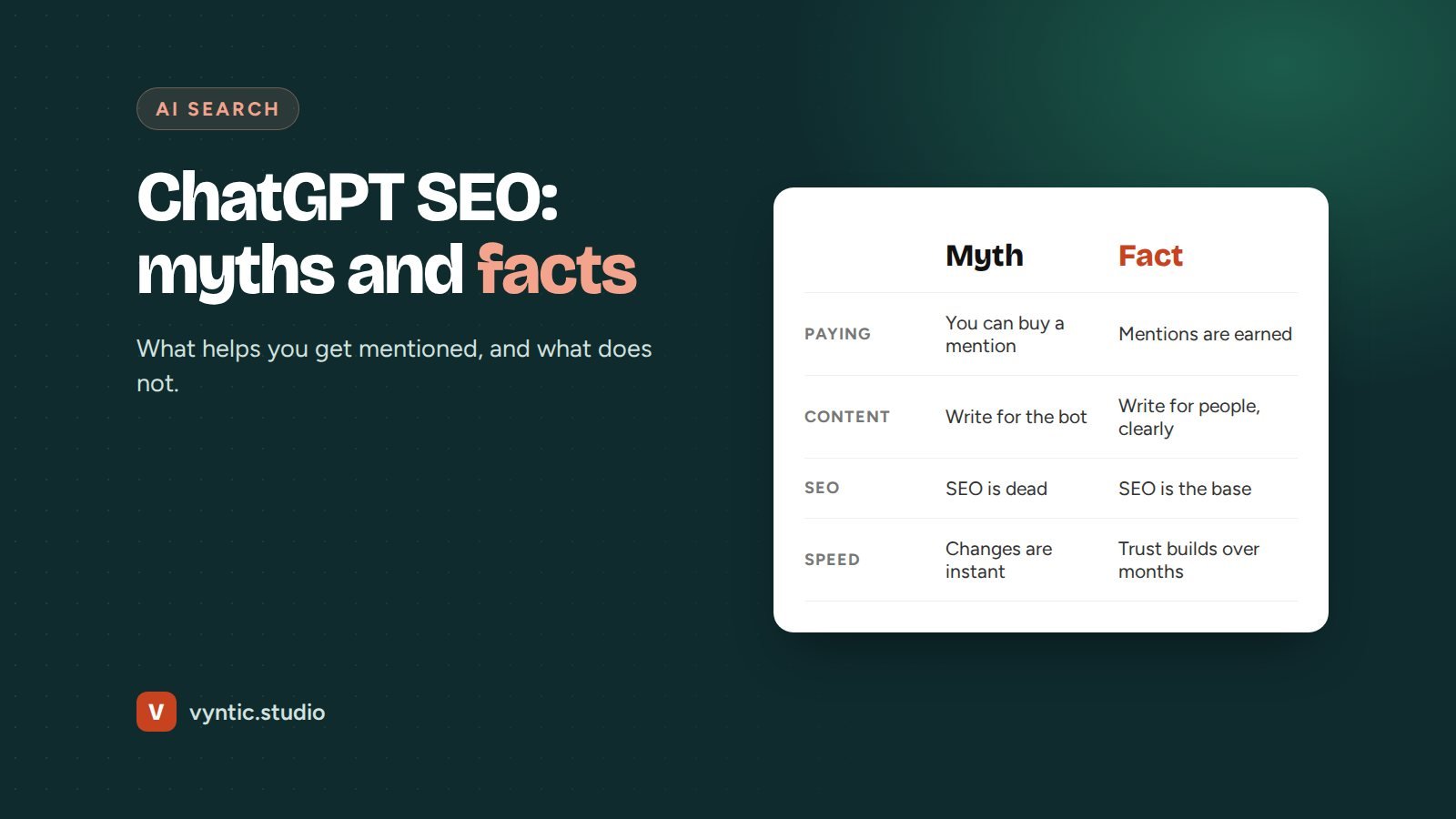
ChatGPT SEO means two different things, and both matter. The first is getting your business mentioned when people ask ChatGPT for recommendations. The second is using ChatGPT as a tool to do your SEO work faster. There is a lot of noise about both. This guide separates the myths from the facts and gives you a practical plan.
How ChatGPT finds businesses
When search is used, ChatGPT runs web searches, reads a set of pages and writes an answer, often with links to its sources. When it answers from its training data alone, it relies on what it learned from public text up to a certain date. Either way, it can only mention businesses it can find and understand, and it favors information that many sources agree on.
That is why ChatGPT SEO is closely tied to normal SEO and to your wider reputation. For a full overview of the field, read our guide to generative engine optimization.
ChatGPT SEO myths to ignore
Myth 1: You can pay to be recommended
There is no way to buy a place in ChatGPT’s normal answers. Anyone selling “guaranteed ChatGPT rankings” is selling something they cannot control.
Myth 2: SEO is dead
ChatGPT search reads pages that rank well in web search. Good SEO is the foundation of being found by AI tools, not something they replace.
Myth 3: You need special AI keywords
You do not need to stuff pages with phrases like “best AI recommended plumber”. You need clear, specific information that answers real questions.
Myth 4: Results change overnight
Some changes on your site can be picked up quickly when ChatGPT searches the web live. But reputation, reviews and third-party mentions build over months.
Myth 5: Only big brands get mentioned
For local and niche questions, ChatGPT often mentions smaller businesses with clear information and strong reviews.
ChatGPT SEO facts that matter
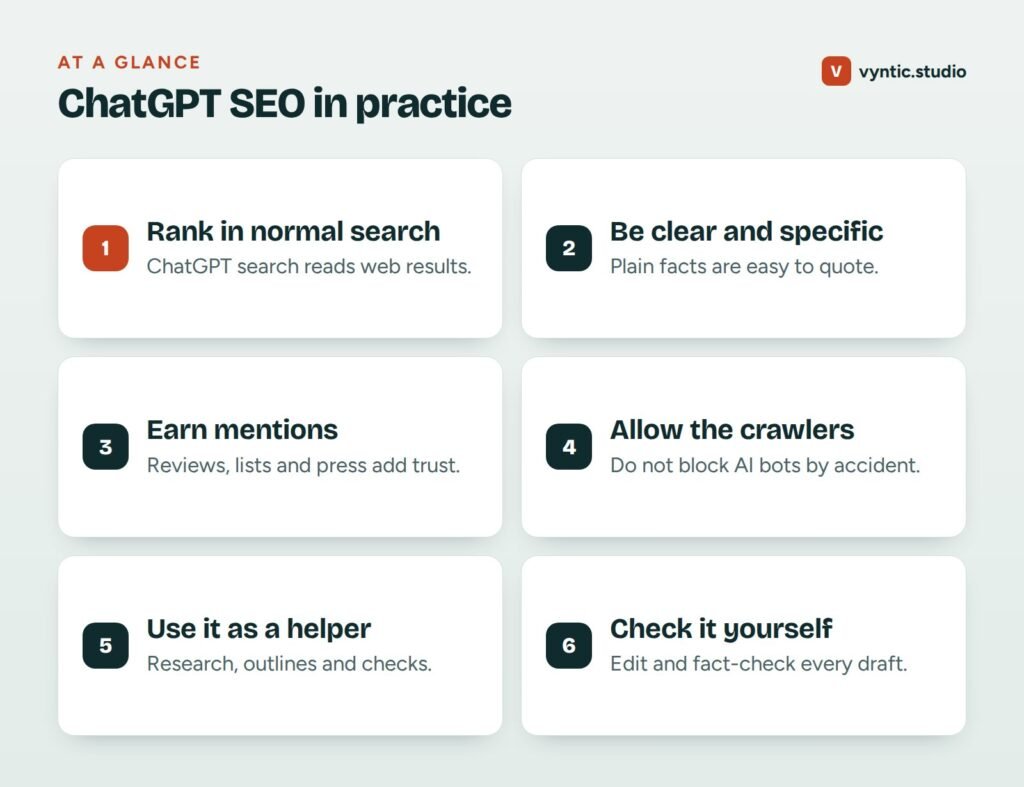
- Clarity wins. Pages that state what you do, where and for whom, in plain sentences, are easier to quote.
- Consistency builds trust. When your website, Google profile and directory listings agree, the answer is more confident.
- Third-party sources count. Reviews, local news, “best of” lists, forums and industry directories are often cited.
- Technical access matters. If your robots.txt or security settings block OpenAI’s crawlers, your site may not be read. Check with your developer.
- Specific beats generic. A page answering “How long does a kitchen remodel take in Denver?” is more useful than a generic “Our services” page.
How to improve your ChatGPT SEO
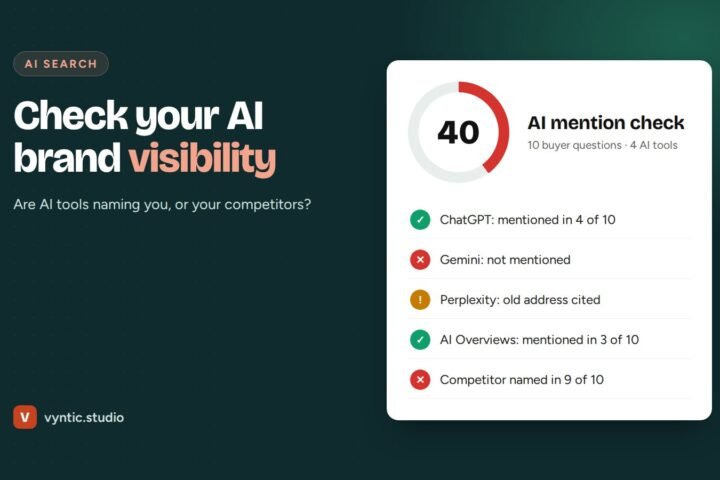
- List the questions buyers ask about your service and test them in ChatGPT with search on.
- Note which businesses and sources appear, and how you are described, if at all.
- Improve your pages so each important question has a clear, specific answer.
- Fix inconsistent details on your Google Business Profile and directories.
- Ask happy customers for detailed reviews that mention the service they bought.
- Look for credible lists, associations and local media where you belong, and get included.
- Repeat the test every month and track changes.
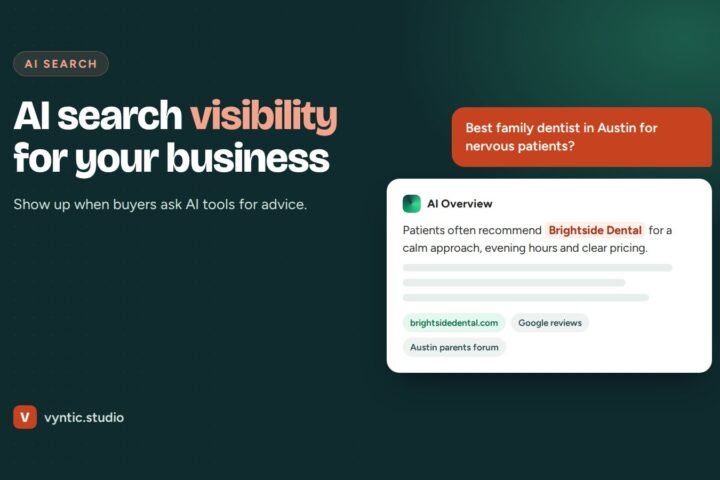
Our article on how to get recommended by ChatGPT goes into each step in more depth, and AI search visibility covers the other AI tools too.
Using ChatGPT for your own SEO work
ChatGPT is a useful assistant if you stay in charge. Good uses include:
- Keyword and question research: ask it to list the questions a customer might ask about a service, then check real search data in a keyword tool.
- Outlines: get a first structure for a page, then reorder and fill it with your own expertise.
- Meta titles and descriptions: ask for ten options within character limits, then pick and edit the best.
- Schema markup drafts: ask it to draft LocalBusiness or FAQ schema, then validate it with Google’s Rich Results Test.
- Content checks: paste a page and ask what questions it fails to answer.
Things to avoid: publishing AI text without editing, trusting facts or statistics without checking them, and creating many thin pages quickly. Generic AI content rarely ranks, and it does nothing for your reputation.
A simple monthly ChatGPT SEO routine
| Task | Time needed |
|---|---|
| Test 10 buyer questions in ChatGPT and note results | 30 minutes |
| Improve one page so it answers a question clearly | 1 to 2 hours |
| Fix one inconsistent listing or directory entry | 15 minutes |
| Ask recent customers for detailed reviews | 15 minutes |
| Look for one credible list, association or article to join | 30 minutes |
Signs your ChatGPT SEO is working
You start to appear for more of your test questions, the descriptions of your business become more accurate, and you see visits from chatgpt.com in your analytics. New customers may also mention that they “asked ChatGPT” before calling. Branded searches for your business name in Google Search Console often rise at the same time.
Where to start
Begin with a monthly test of ten buyer questions and a quick check of your own site and listings. If you want help, our AI search visibility service runs the tests, fixes the gaps and builds the mentions for you. Book a free project call and we will show you what ChatGPT says about your business today.
Frequently asked questions
Does ChatGPT use Google results?
ChatGPT search uses its own crawler and third-party search providers. In practice, pages that rank well in normal search engines are more likely to be read and cited.
Can I use ChatGPT to write my blog posts?
You can use it to research, outline and draft, but publish only content you have checked, edited and improved with your own knowledge. Generic AI text rarely ranks or gets cited.
Should I block ChatGPT from crawling my website?
For most businesses that want to be recommended, no. Blocking AI crawlers can stop your pages from being read and cited. Only block them if you have content you need to protect, such as paid material.
How do I know if ChatGPT mentions my business?
Ask it the questions your customers would ask, with search turned on, and note whether you appear. Repeat the same questions monthly.
Comments